My first grey dress came from a supermarket clothing rail, the kind you pick up while buying milk, and it taught me that grey is not one colour but about forty, and the wrong one will make you look like you've come down with something. It was a flat, dull grey that did nothing for my skin, and I wore it to a lunch and spent the whole time wondering why I felt washed out. Lesson learned: grey has undertones, and you have to find yours before anything else matters.
A good grey dress earns its stripes over time rather than in that first wear. Mine from a few years back, a simple jersey midi, has been washed more times than I can count and still holds its shape, no bobbling under the arms, no colour gone patchy from the machine. The cheap one, by contrast, started pilling at the hips within a month, the kind of fuzzing that makes fabric look older than it is, and the grey itself shifted towards a sort of murky blue after a few washes because the dye hadn't been set properly. Look after a decent one with a cool wash, inside out, and let it drip dry rather than tumble, because heat is what kills both the colour and the stretch. Steam rather than iron if you can, grey shows every crease and every scorch mark with embarrassing clarity.
If you've got nothing grey hanging up at all, start with a mid tone, somewhere between charcoal and dove, in a simple shape with sleeves and a bit of structure at the waist. That middle grey works on more people than the very pale or very dark ends, and a defined waist stops the whole thing reading as institutional, which grey can tip into if you're not careful. Avoid anything too shapeless for a first buy, because grey without shape just looks like you've thrown on a sheet, whereas grey with some tailoring looks deliberate.
The difference between a grey dress that earns its place and one that disappoints is almost always in the fabric and the finish before anything else. A good one has enough weight to hang properly rather than cling or float about, seams that sit flat rather than puckering at the first wash, and a zip or button that doesn't strain after a big meal. Cheap grey fabric often has a slight sheen that reads as synthetic under any light, while a better one has a matte, slightly chalky finish that looks far more expensive than it is. Check the lining too, a loose or scratchy lining is usually the first sign the rest was rushed.
Try it on and sit down before you buy it, because grey shows every pull and crease a standing mirror never will.

 Work DressesGrey Work Dresses That Flatter Without Trying
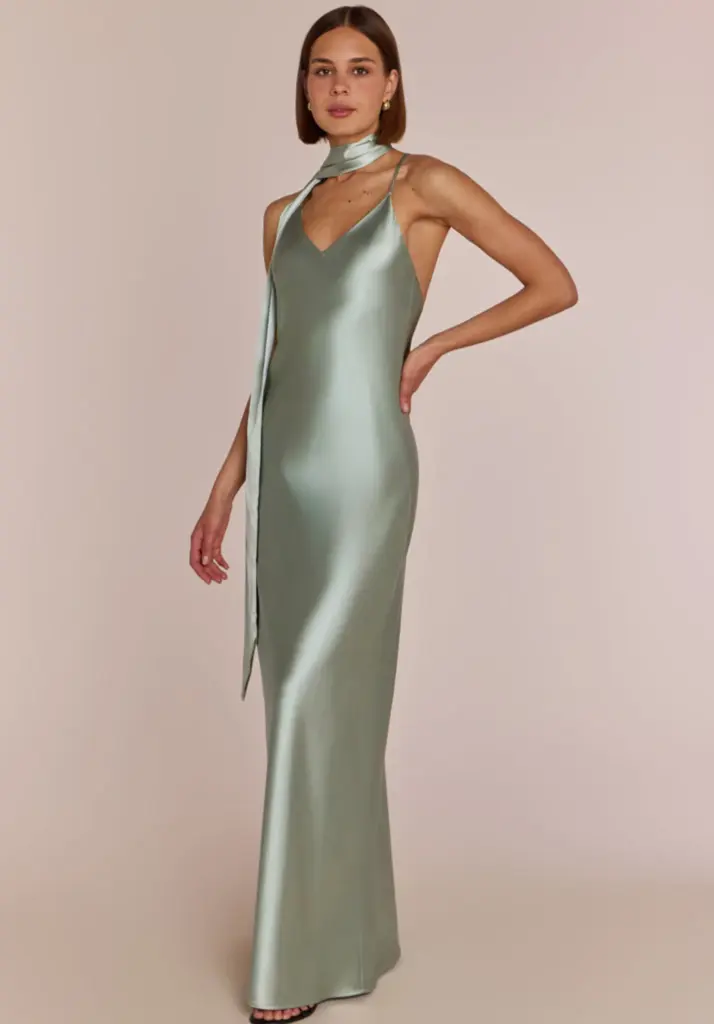
 Work DressesThe Grey Work Midi Dresses Worth Your Wardrobe Space

 Shirt DressesGrey Work Shirt Dresses for Monday to Friday

 Wrap DressesA Closer Look at the Best Grey Wrap Dresses

 Shirt DressesGrey Wrap Shirt Dresses for When You Want to Feel Put Together

 Tie Waist DressesGrey Tie Waist Shirt Dresses: What We’d Buy Now

 Tie Waist DressesOur Shortlist of Grey Tie Waist Work Dresses

 Tiered DressesStandout Grey Tiered Dresses to Shop

 Tunic DressesThe Edit: Grey Tunic DressesAlso worth a lookMidi DressesI used to think midi dresses were what you wore when you'd given up on deciding whether to…See the collections →

 V Neck DressesGrey V Neck Evening Dresses That Always Get Compliments

 V Neck DressesEffortless Grey V Neck Mini Dresses We Love

 V Neck DressesShop Our Favourite Grey V Neck Shirt Dresses

 Velvet DressesGrey Velvet Dresses Worth a Closer Look

 Tie Waist DressesThe Grey Tie Waist Evening Dresses We’d Wear Anywhere

 Tie Waist DressesGrey Tie Waist Maxi Dresses That Make Getting Dressed Easy

 Tie Waist DressesThe Grey Tie Waist Midi Dresses Shortlist

 Slip DressesGrey Slip Dresses You’ll Reach for First

 Strappy DressesGrey Strappy Evening Dresses: Our Honest ShortlistAlso worth a lookMaxi DressesA maxi dress is only as good as its hem, because that is the part that catches wind,…See the collections →

 Strappy DressesThe Grey Strappy Midi Dresses Worth Planning an Outfit Around

 Strappy DressesGrey Strappy Mini Dresses That Have Caught Our Eye

 Summer DressesGrey Summer Dresses for Warmer Days

 The Grey Sweater Dresses Worth Your Wardrobe Space

 T-Shirt DressesOur Shortlist of Grey T Shirt Dresses

 Shift DressesThe Only Grey Shift Dresses You Need to See

 Shirt DressesGrey Shirt Dresses: Picks We Stand By

 Short Sleeve DressesGrey Short Sleeve Evening Dresses That Feel Special

 Short Sleeve DressesGrey Short Sleeve Midi Dresses You’ll Want to Live InAlso worth a lookMini DressesThe thing nobody mentions about a mini dress is what happens to the hem after the third wash and the fifth wear.See the collections →

 Short Sleeve DressesGrey Short Sleeve Shirt Dresses We’d Happily Wear on Repeat

 Silk DressesGrey Silk Shirt Dresses for When You Want to Feel Put Together

 Party DressesGrey Party Dresses for When You’ve Got Somewhere to Be

 Printed DressesGrey Printed Midi Dresses We’re Adding to Basket

 Ribbed DressesOur Kind of Grey Ribbed Midi Dresses

 Ribbed DressesGrey Ribbed Mini Dresses: What We’d Buy Now

 Ruched DressesOur Pick of the Best Grey Ruched Midi Dresses

 Satin DressesThe Grey Satin Dresses We Keep Going Back To


