You can spot a good shirred dress from right across a room. The gathered panel sits close without digging in, the elastic rows run even and flat under the fabric, and the whole thing moves like it's made of one piece of cloth rather than fifty rows of thread fighting each other. A poor one bunches at the sides, puckers where the shirring meets a seam, and leaves little red lines on your ribs by the end of the day because the elastic's been pulled too tight to compensate for thin fabric that couldn't hold its own shape.
This isn't the dress for a smart office or anywhere that wants structure. Shirring is all give, no architecture, so if you need something that holds a waist or skims rather than clings, look elsewhere, because the fabric is doing the opposite job here, it's hugging on purpose. It also struggles in real heat if the fabric's a heavy cotton blend, since all those gathered rows trap warmth against the body, so lighter viscose or a proper cotton voile version earns its summer place far more than anything with polyester thickness to it. Come fine autumn days it layers well under a jacket, since the shirred bodice gives a cardigan or shacket something to sit over without adding bulk. Over months, the elastic is the part that tells you the truth. Good quality holds its recoil through a full season of washing, lesser elastic goes slack around week six and the dress stops springing back, it just hangs there looking tired. Hand washing or a cool, gentle machine cycle keeps the stretch alive far longer than a hot wash ever will, and skip the tumble dryer entirely, heat is what kills elastic fastest.
The difference between a dress that lasts and one that doesn't usually comes down to what's actually threaded through the fabric. Proper shirring uses multiple rows of elastic thread sewn directly into natural or part natural fibres, so the gather has some weight and drop to it rather than sitting puffy and synthetic. Cheaper versions use thin elastic on thin polyester and the gathering looks flat and plasticky from day one, never mind after washing. Check the stitching where the shirred section meets a yoke or a cuff too, since that's the point under the most strain and where loose threads show first.
Before buying, stretch the shirred panel gently in the shop and watch how quickly it springs back rather than staying loose. Check the rows are even and parallel, not wavering or bunched at one end, and look at the fabric held up to light, because anything too thin will cling unkindly once it's gathered this tightly against you.

 Yellow DressesYellow Shirred Maxi Dresses That Make Getting Dressed Easy

 Yellow DressesEffortless Yellow Shirred Midi Dresses We Love

 Yellow DressesYellow Shirred Summer Dresses on Our Radar
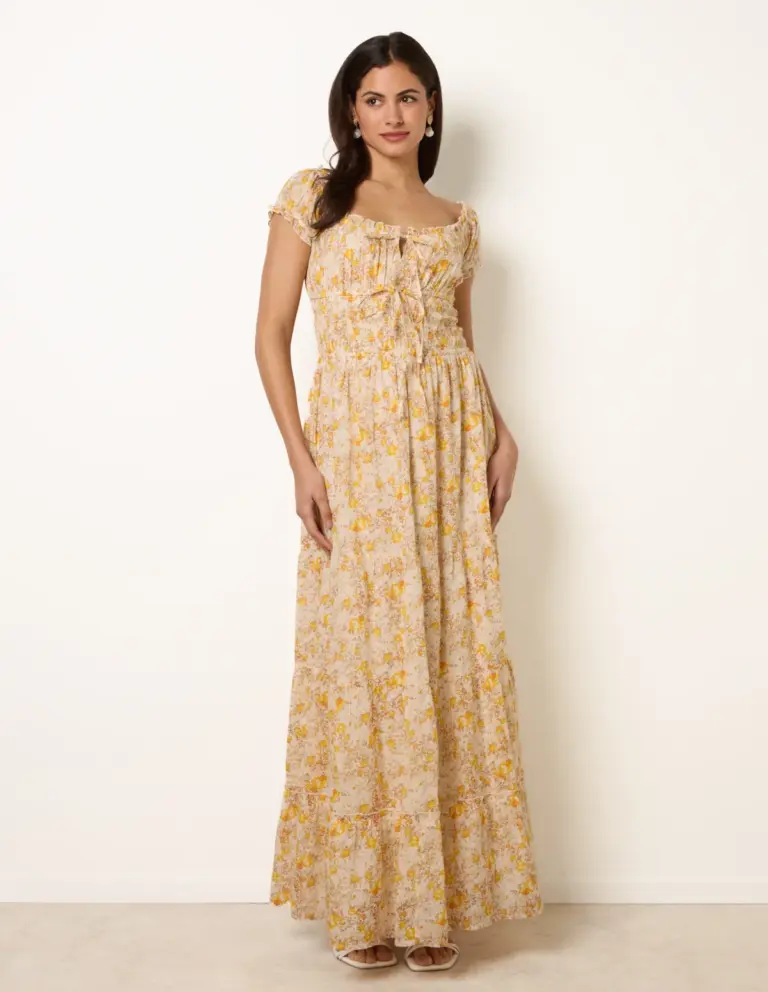
 White DressesWhite Shirred Denim Dresses Worth a Closer Look

 White DressesThe White Shirred Evening Dresses Worth Planning an Outfit Around

 White DressesEffortless White Shirred Floral Dresses We Love

 White DressesOur Kind of White Shirred Maxi Dresses

 White DressesWhite Shirred Midi Dresses for When You Want to Feel Put Together

 White DressesWhite Shirred Mini Dresses for Every Occasion on Your CalendarAlso worth a lookMidi DressesI used to think midi dresses were what you wore when you'd given up on deciding whether to…See the collections →

 White DressesEffortless White Shirred Summer Dresses We Love

 Tiered DressesWhite Shirred Tiered Dresses: The Edit

 Long Sleeve DressesShirred Long Sleeve Dresses for Every Occasion on Your Calendar

 Polka Dot DressesShirred Polka Dot Dresses That Make Getting Dressed Easy

 Bardot DressesShirred Maxi Bardot Dresses: Our Honest Shortlist

 Slip DressesEffortless Shirred Slip Dresses We Love

 Denim DressesShirred Maxi Denim Dresses on Our Radar

 Summer DressesThe Best Looking Shirred Summer Dresses Out There

 Maxi DressesShirred Maxi Dresses That Feel SpecialAlso worth a lookMaxi DressesA maxi dress is only as good as its hem, because that is the part that catches wind,…See the collections →

 Halter DressesShirred Maxi Halter Dresses That Earn Their Place

 Denim DressesShirred Midi Denim Dresses That Tick Every Box

 Midi DressesThe Shirred Midi Dresses Worth Planning an Outfit Around

 Lace DressesThe Best Shirred Midi Lace Dresses to Shop Now

 Shirt DressesThe Shirred Midi Shirt Dresses We’re Eyeing Up This Season

 Wrap DressesOur Favourite Shirred Midi Wrap Dresses

 Denim DressesShirred Mini Denim Dresses That Always Get Compliments

 Mini DressesThe Shirred Mini Dresses Worth Planning an Outfit Around

 A Line DressesShirred A Line Dresses for When You Want to Feel Put TogetherAlso worth a lookMini DressesThe thing nobody mentions about a mini dress is what happens to the hem after the third wash and the fifth wear.See the collections →

 Puff Sleeve DressesWhere to Find the Best Shirred Mini Puff Sleeve Dresses

 Denim DressesOur Favourite Shirred Denim Dresses

 Summer DressesShirred Mini Summer Dresses You’ll Want to Live In

 Evening DressesThe Shirred Evening Dresses Worth Your Wardrobe Space

 Off Shoulder DressesShop the Edit: Shirred Off Shoulder Dresses

 Halter DressesThe Shirred Halter Dresses on Our Wishlist

 One Shoulder DressesShirred One Shoulder Dresses for Every Occasion on Your Calendar

 Satin DressesSatin Shirred Evening Dresses: Our Honest Shortlist


